cuisine


 Sikkim


Sikkim has its own unique dietary culture with specific cuisine and food recipes. In the Sikkim Himalayas traditional foods are an integral part of the dietary culture of the various ethnic groups of people consisting of the Nepalese, Bhutias and Lepchas. Rice is the staple food. Meat and dairy products are also consumed depending on availability. Besides these, various traditional fermented foods and beverages, which constitute of about 20 per cent of the basic diet for long centuries are prepared and consumed. The dietary-culture of this region is mostly reflected in the pattern of food production. Depending on the altitudinal variation, finger millet, wheat, buckwheat, barley, vegetable, potato, soybeans, etc. are grown. Some of the common traditional cuisine with their food recipes has been presented for introduction of dietary culture of the Sikkim Himalayas, as well as for product diversification.

 Momo

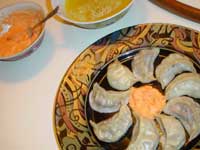
Momo, steamed dumpling prepared from wheat flour and meat/vegetable is very common Tibetan food. Momo has already entered commercial production and is well placed in menus of all local hotels/restaurant.


Momo

(steamed dumpling)

Serves 30 momos


Wheat flour 4 cups

Meat 750 g, minces

Onion 2 chopped

Salt 1 Teaspoon

Ginger 1 thumb-sized, finely chopped   


Tomato achar

(pickle)

Tomato 2 large, boiled and crushed

Green chilies 4

Salt 1 Teaspoon

Boil tomato, crush and grind with green chilies in stone mortar. Add salt and mix well to give a thick past of tomato achar.


Preparation : Mix well wheat flour with 2 cups of water and knead into a stiff paste, roll out on a floured board till it is very thin. The rolled dough should be about 2 feet square. Cut in circle with the rim of tea cup. Place a circle of dough on your left hand, slightly stretch the edges and place about a teaspoon of filling in the centre. Then with your right thumb and forefinger pleat the dough together over the centre of the meat, forming a pin-wheel design. Your left thumb is used to tuck the minced meat down as you go, and the dumpling turns on your palm as you pleat around it. A special steamer locally called moktu is required. Filled up dumplings are placed on oiled racks, slightly separated in the moktu. Bottom of the moktu is filled with water and steam the dumplings for 20-25 min. Momo is ready to serve hot. Momo is eaten with meat/vegetable soup, and tomato achar.

 Thukpa/ Gya-Thuk

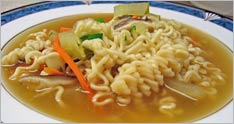
Thukpa/Gya-thuk is a typical Tibetan style noodles in soup. Thukpa/Gya-thuk is very popular local cuisine also available in all restaurants and hotels of these regions.


Thukpa/Gya-thuk

(Noodle soup)

Serves 4 to 6


Egg noodles 300 g

Meat (beef/pork/mutton/chicken) 250 g, minced

Onion 2 finely chopped

Onion leaves 1 Tablespoon, chopped

Garlic 3 flakes, chopped

Green chili 4 sliced   

For soup: About 3 litres of clear bone soup - beef/ pork/ mutton / chicken stock. Add 1 Teaspoon of salt.


Preparation : Fry chopped onions with garlic and green chilies, then add minced meat, fry for 10 min. Add salt to taste. Then keep aside after cooking.


Boil 4 litre of water vigorously, and drop noodles, boil for 2 min, stirring occasionally. Drain the noodles through a large sieve and run cold water over them to stop them from sticking. Squeeze the water from the noodles and transfer to a serving bowl. Pour hot soup into bowl with noodles. Put fried meat-onion mixture and finely chopped green onion leaves on top of it. Thukpa/Gya-thuk is ready to serve hot.
 

This free website was made using Yola.

No HTML skills required. Build your website in minutes.

Go to www.yola.com and sign up today!

Make a free website with Yola